Helicopters fly low, so cloud base, visibility and wind decide whether a flight goes ahead. We review the forecast the day before and again on the morning of the flight, and the captain makes the final decision. If the flight is cancelled because of the weather, you pay nothing. This guide explains how UK flights are planned.
Why weather matters more for helicopters
Most helicopter charters fly by sight, under visual flight rules, at modest heights. That is what lets you see the city from the cabin, and it also means the pilot needs enough visibility and enough space between the helicopter and the cloud. Fog, low cloud and heavy rain reduce both. Strong wind and gusts matter too, especially when landing on a raised pad beside tall buildings.
What is checked
- Cloud base and visibility: how high the cloud is and how far the pilot can see.
- Wind and gusts: strong or gusty wind affects the ride, the landing and the helicopter’s limits.
- Rain, snow and thunderstorms: heavy rain cuts visibility, and thunderstorms are avoided altogether.
- Temperature and ice: flying in conditions where ice could form on the aircraft is avoided.
Where the forecast comes from
Pilots and dispatchers use Met Office forecasts, aviation forecasts for the airfields near your route and weather model data for the route itself. Aerodrome forecasts only cover a flight a day or two ahead, which is why we look again nearer the time.
The London Heliport
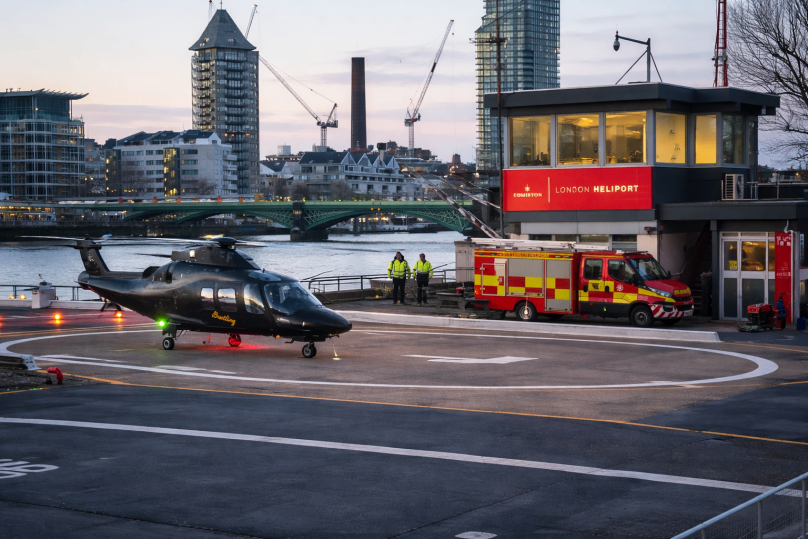
The London Heliport sits on a raised platform over the tidal Thames, among tall buildings. Its published conditions list local hazards such as tall buildings and cranes, shipping, birds, and turbulence or wind shear, so wind and visibility at the heliport are watched closely. See Battersea Heliport opening hours for the other limits that apply.
Who decides, and what happens next
The captain makes the final decision on the day. If the weather is marginal, a flight may be delayed, flown by a different route or moved to a different time; if it cannot be flown safely it is cancelled. If the flight is cancelled because of the weather, you pay nothing.
Some of our helicopters, such as the Agusta A109 Grand profile, are IFR-capable, which widens the weather in which a flight can go ahead, but the limits of the landing site still apply.
How we keep you informed
We review the forecast the day before and again on the morning of your flight, and we tell you if the picture changes. If you have an important appointment, tell us when you book; for events and race days, see flying to the races by helicopter.
Frequently asked questions
Can a helicopter fly in the rain?
Yes, in light or moderate rain if visibility and cloud base are acceptable. Heavy rain, thunderstorms and fog are the problem.
Can helicopters fly in fog?
Normally not. Most charter flights need enough visibility to fly by sight, so fog and very low cloud usually delay or cancel a flight.
What wind is too strong for a helicopter?
Each helicopter has published limits, and gusty wind near tall buildings matters most. The captain decides on the day.
What if my flight is cancelled for weather?
If the flight is cancelled because of the weather, you pay nothing.
Related: how weather and darkness affect helicopter flights in the UK (helicopterhireprices.co.uk).
Plan your flight
Worried about the forecast? Tell us your date and how flexible you are and we will reply with a price and keep you updated. Our charter team is available 24 hours a day.