A twin-engine helicopter has two engines, so if one has to be shut down the other can often keep the helicopter flying, depending on weight, height and conditions. A single-engine helicopter relies on a controlled descent called autorotation. In practice, commercial flights over built-up areas such as central London are flown in twin-engine helicopters, which is why we specialise in them. This guide sets out what passengers should know.
How a helicopter keeps flying
A helicopter is held up by its main rotor, which the engines drive. If the engine of a single-engine helicopter fails, the pilot lowers the lever that controls rotor pitch and the upward flow of air keeps the rotor turning. This is called autorotation. It is a standard manoeuvre that every helicopter pilot practises, and it lets the aircraft descend under control and land, as long as there is a suitable area within reach.
What a second engine adds
With two engines, the loss of one does not remove all the power. At sensible weights and heights the helicopter can continue flying on the remaining engine, which gives the crew time and choice about where to land. The details depend on weight, height, speed and temperature, and the manufacturer publishes the limits for each type.
Why it matters over a city or the sea
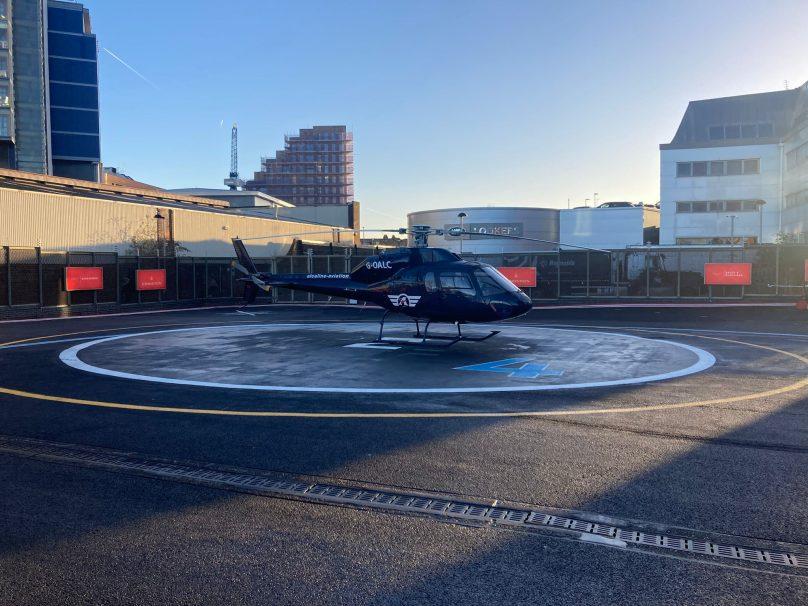
Over open countryside there are usually fields to land in. Over central London or the sea there are not. That is why the rules for commercial passenger flights over built-up areas and over water set performance requirements that, in practice, mean twin-engine helicopters are used. It is also why flights from the London Heliport are flown in twin-engine helicopters.
Twin and single compared
| Twin-engine | Single-engine | |
|---|---|---|
| Engines | Two | One |
| After an engine failure | Can often continue flying on the other engine | Descends by autorotation to a suitable landing area |
| Typical use | Passenger charter over cities and water, offshore, air ambulance | Training, sightseeing, aerial work, flights over open country |
| Running cost | Higher | Lower |
A twin-engine helicopter is not a guarantee
Two engines add a margin, not immunity. Safety also depends on the crew, maintenance, weather decisions and how the flight is planned. That is why charter flights are flown by companies holding an Air Operator’s Certificate and regulated by the Civil Aviation Authority.
The twin-engine helicopters we fly
Our London charters use the AS355 Twin Squirrel profile, the Agusta A109 Grand profile and the Airbus H145 profile. See the fleet page for seating and details, or read how a helicopter flies.
Frequently asked questions
Are twin-engine helicopters safer?
They add a margin after an engine failure, but safety also depends on the crew, maintenance and weather decisions. Charter flights are flown under an Air Operator’s Certificate regulated by the Civil Aviation Authority.
What happens if a helicopter engine fails?
A single-engine helicopter descends by autorotation to a suitable landing area. A twin-engine helicopter can often continue flying on the remaining engine, depending on weight, height and conditions.
Why do single-engine helicopters exist?
They are cheaper to buy and run, and are well suited to training, aerial work and flights over open country.
Are all your helicopters twin-engine?
The helicopters we fly from London Heliport, the AS355, Agusta A109 Grand and Airbus H145, all have two engines.
Plan your flight
Want to know which helicopter suits your trip? Tell us your route and party size and we will recommend one and reply with a price. Our charter team is available 24 hours a day.